
Chord Mojo 2 and Hugo 2
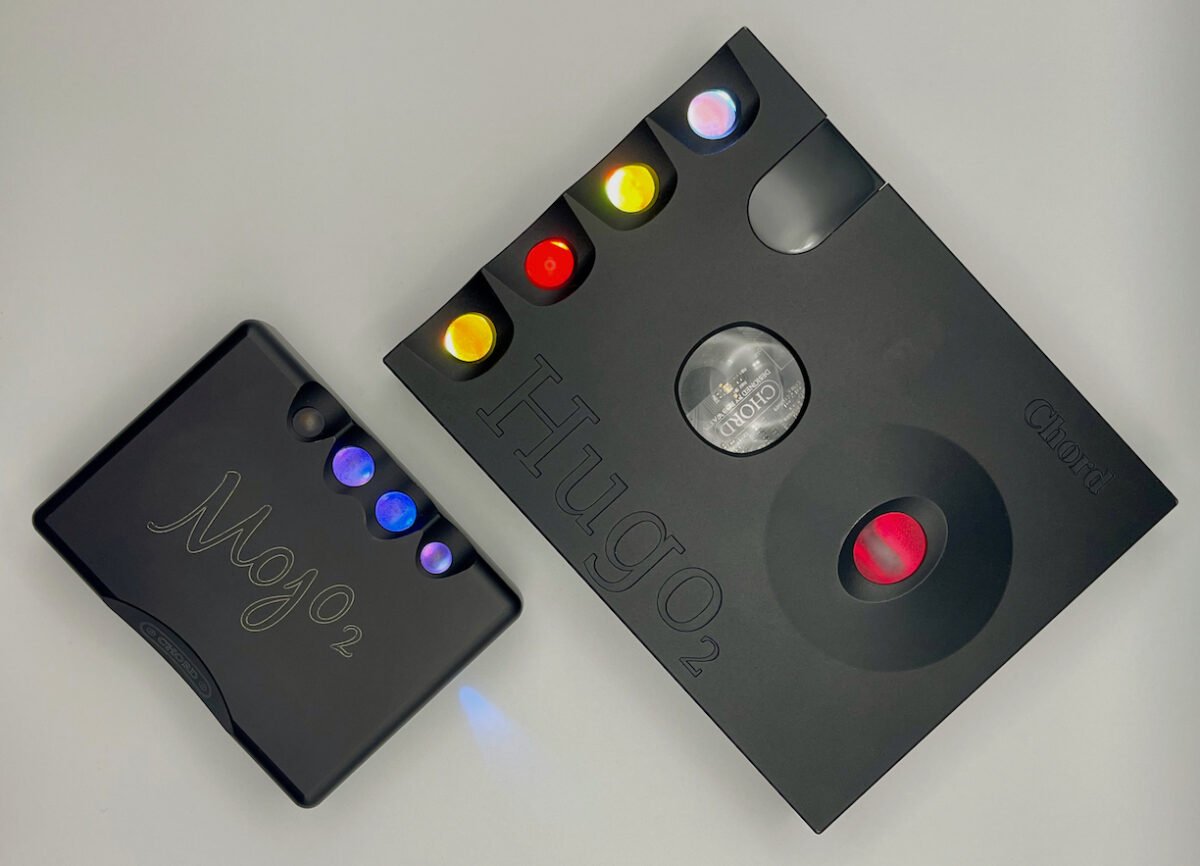
Chord Mojo 2 (Released: January 2022), Price: ~$650 / £495
Chord Hugo 2 (Released: April 2017), Price: ~$2,500 / £1,800
In high-end audio circles, few brands carry the prestige of Chord Electronics. Today, we’re looking at the two pillars of their portable range: the Mojo 2 and the Hugo 2. While they share the same “polychromatic” DNA, they are aimed at different listeners and budgets.
Build Quality and Construction
The Mojo 2 and Hugo 2 are manufactured in the UK and share a precision build, but their physical presence differs significantly.
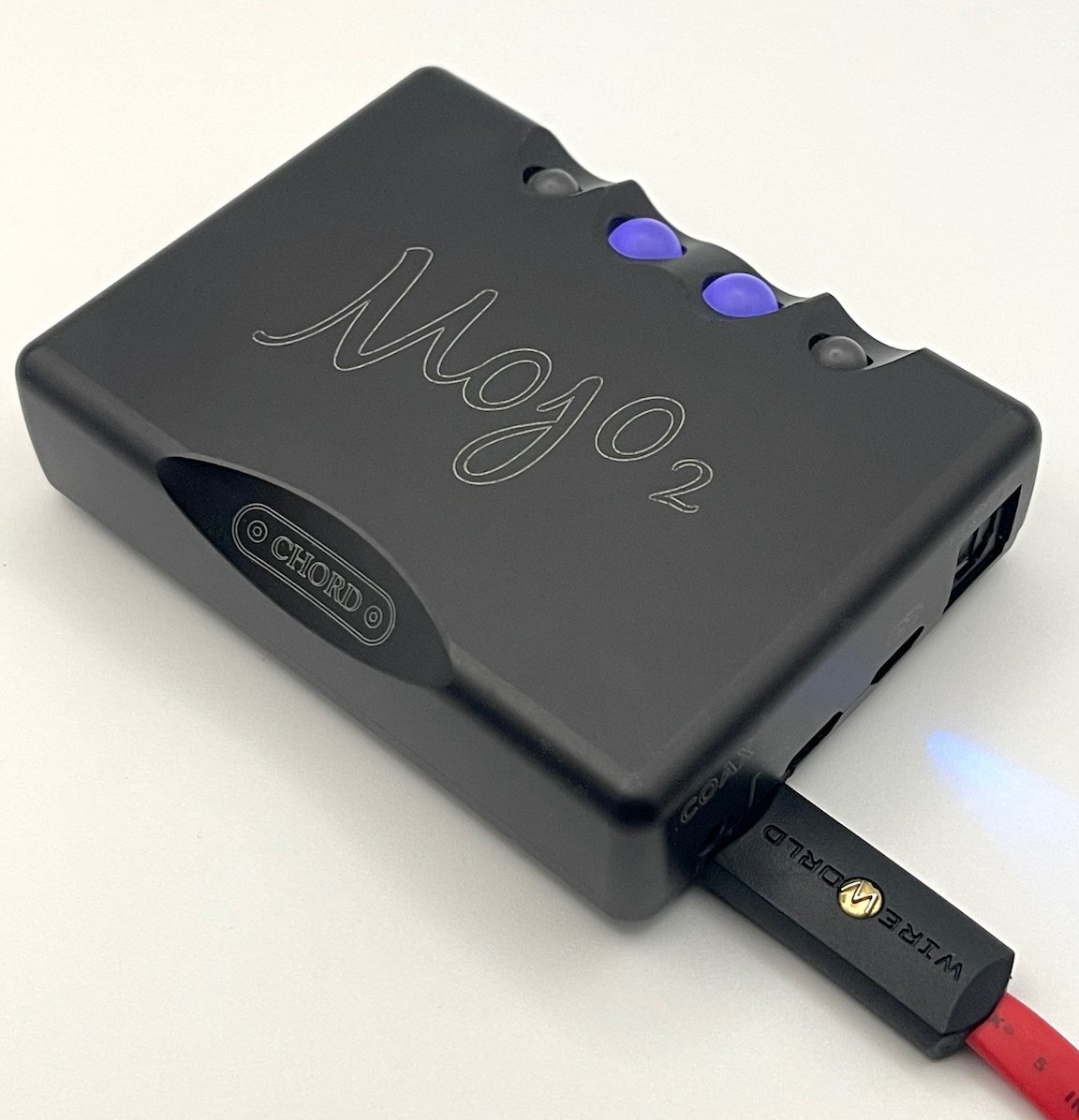
The Mojo 2 is machined from a solid block of aircraft-grade aluminum with a bead-blasted finish that feels dense and premium. Its rounded corners and compact size make it exceptionally “hand-friendly” and durable for pocket use. The new polycarbonate spheres are seated more firmly than the original Mojo, with a more tactile, “clicky” response.
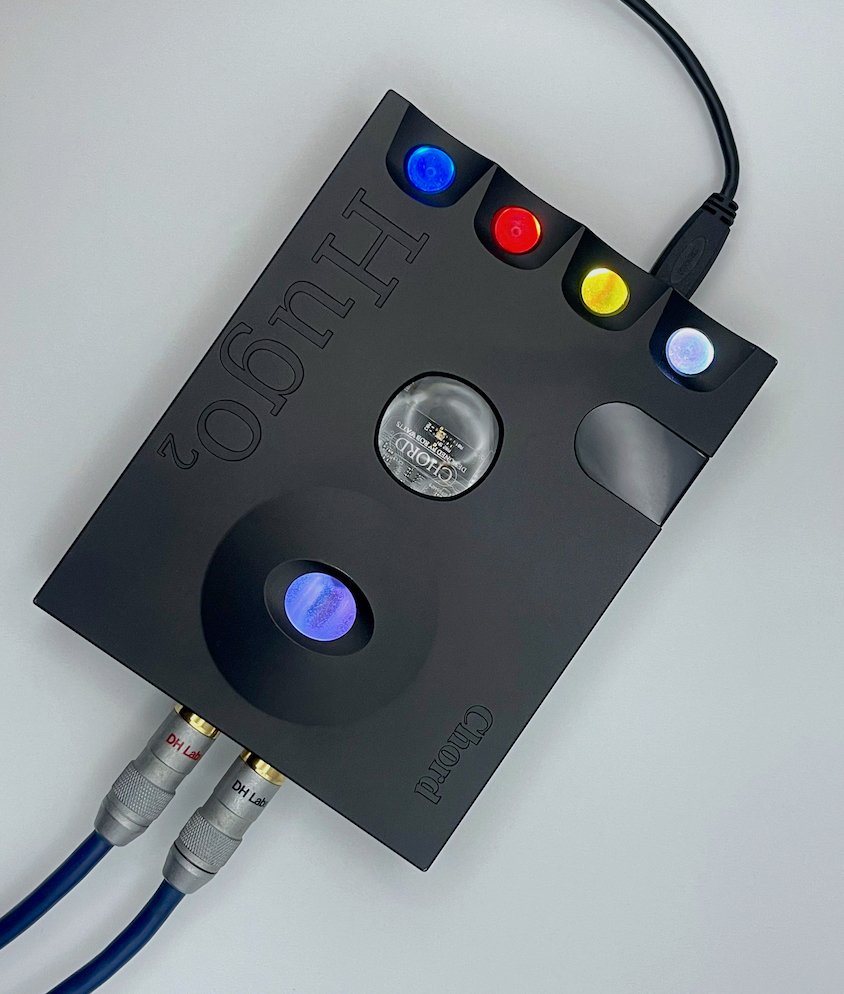
The Hugo 2 features a larger, more complex precision-machined aluminum chassis with sharper, sleeker geometric lines. The finish is refined, with laser-etched logos and a top-mounted volume “roller” that glows with the signature Chord color spectrum.
The Age Gap: Why the Hugo 2 Still Holds Its Own
At nearly nine years old, the Hugo 2 is an “older” unit by tech standards. However, Chord’s unique use of FPGA (Field Programmable Gate Array) technology allows their DACs to stand the test of time. While the Mojo 2 is newer, the Hugo 2 features a larger FPGA with a significantly higher “tap length” (49,152 vs. Mojo 2’s 40,960). This additional processing power allows the Hugo 2 to reconstruct the original analog signal with a level of spatial accuracy and timing transparency that surpasses the Mojo 2.
Connectivity and Power
Inputs: Both units utilize Micro-USB for data and charging, but the Mojo 2 adds a modern USB-C input.
Power Supply: Both are battery-operated for true portability, but for stationary use, both models can be powered via an AC brick. They also feature “Intelligent Desktop Mode” to protect battery life when plugged in long-term.
Amp Design & Power: The Hugo 2 features a robust discrete output stage and higher power output (1050mW into 8 ohms). The Mojo 2 is surprisingly capable for its size, delivering 600mW into 30 ohms, which is plenty for most portable and moderate loads.
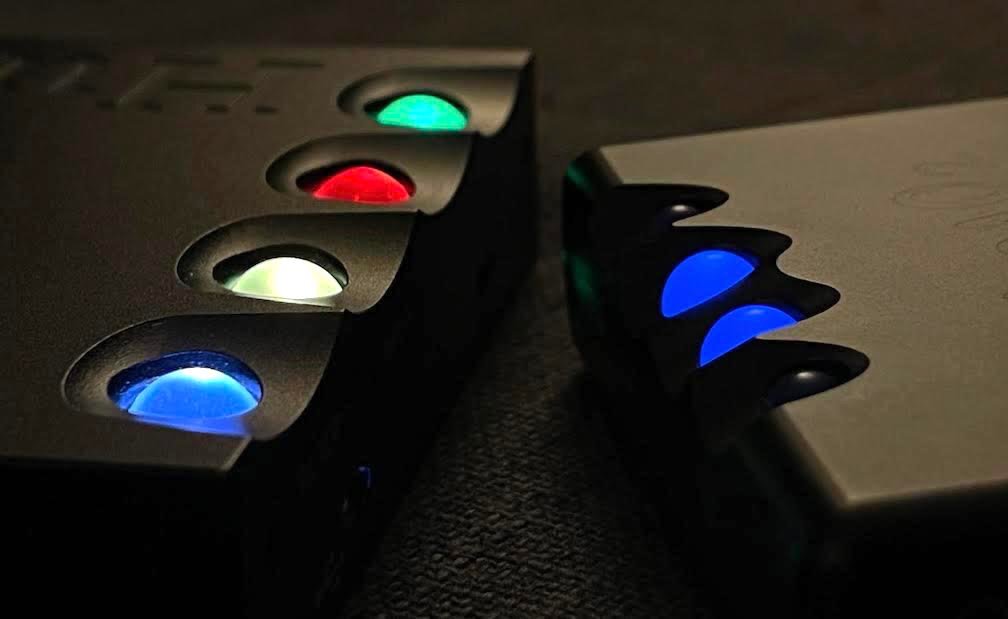
Navigation: The Mojo 2 uses the classic “polychromatic” glowing spheres. Navigating the new UHD DSP menu (EQ settings) requires learning a color-coded language; it’s brilliant once mastered, but there is a learning curve. The Hugo 2 shares the sphere system but adds a dedicated high-quality metal remote, allowing you to easily switch inputs or adjust filters—a luxury the Mojo 2 doesn’t offer.
Preamps: The Hugo 2 is a true preamp with dedicated RCA outputs and serves as a precise monitor controller. While the Mojo 2 lacks RCA ports, it can be used as a preamp via its 3.5mm outputs. To achieve a standard 2V line-level output, the volume spheres should be set to Light Blue (Cyan). Pushing the volume further into the White/Purple range (over 4.3Vrms) could clip the input stage of your power amplifier.
Note: 2026 Mojo 2 Hardware Refresh: A recent update to the Mojo 2 (identifiable by a bold “2” on the chassis) introduces two significant physical changes. First, the USB-C port now supports both data and charging on a single cable, an upgrade over the “data-only” port on earlier units. Second, one of the 3.5mm jacks has been replaced with a 4.4mm Pentaconn output. While the 4.4mm jack is a welcome convenience for modern cable standards, it is important to note that this is not a “true balanced” output. Chord’s designer, Rob Watts, famously prefers single-ended designs because he believes the extra circuitry required for a true balanced signal path can actually introduce more noise and timing errors.
Listening Experience
Comparing the sound of DACs and headphone amplifiers is inherently subjective. Our perceptions are shaped not only by what we hear, but by what we see, feel, and expect. Industrial design, ergonomics, price, and reputation can subtly color the experience. In controlled, level-matched blind tests, differences that initially seem pronounced often become far less obvious. In this review, listening impressions come from extended use rather than rapid A/B testing.
The Hugo 2 and the Mojo 2 are built on Chord’s distinctive design philosophy—using a custom FPGA-based architecture instead of a traditional DAC chip. This gives both devices a uniquely smooth, organic sound with a lifelike reproduction that sets them apart from conventional designs.
The Hugo 2 offers a 4K prime lens into the music, with pinpoint clarity, snappy dynamics, and a vast spatial depth. The bass is quick and precise, striking with a nimble impact. The mids gently romance you with a celestial beauty and elegance that reveals the musician’s intent. The treble has a crystalline clarity, like a brisk morning walk—clean, pure, and fresh.
The Mojo 2, while also capable of extracting subtle detail, offers a slightly thicker and rounder texture. It delivers a rich, grounded bass with a subtly gummy grip that anchors the sound. This pleasing fullness extends naturally into the midrange, where each note feels lively and complete. The treble blends seamlessly, with just the right amount of texture and air. It’s a hearty sound signature that brings depth to any genre—from acoustic and jazz to rock and electronic.
Customizing the Sound: EQ and Filters
Mojo 2’s “UHD DSP”: This is an exquisite equalization system that allows you to adjust four frequency bands by ±9 dB without any loss in signal quality.
Hugo 2’s Filter Options: The Hugo 2 does not have equalization but uses four filter options to subtly shape the sound. You can toggle between Incisive Neutral (White/Green) for ultimate transparency and Warm/Warmer (Orange/Red) for a smoother, more relaxed presentation.
Professional Use: Mixing and Mastering
The Hugo 2: In a studio setting, the Hugo 2 can be used as a critical monitoring tool. Its tonal, dynamic, and imaging precision makes it viable for engineers who want a “truth-teller.” At the same time, it has the “Chord way” of presenting the soul of the music, making for a non-clinical listening experience.
The Mojo 2: The Mojo 2 boasts best-in-class performance for mobile engineering duties. Its “UHD DSP” allows engineers to calibrate their headphones to a flatter response, ensuring that their portable monitoring is as accurate as possible. While slightly less analytical than the Hugo 2, its transparency still exceeds standard studio audio interfaces.
Conclusion
Evaluating these two units over an extended period has been an absolute pleasure. Musically, both units have a way of turning digital data into something effortlessly expressive and alive. The Mojo 2 is hard to beat if you prefer a thick and fluid audiophile sound for on-the-go use. However, if you want a brilliantly vivid and defined rendering of the music—and a device that can double as a quality preamp—the Hugo 2 remains a reference point that holds its own against newer offerings.
The Verdict: Mojo 2 for the pocket; Hugo 2 for the pedestal. Both remain gold standards in their respective classes.